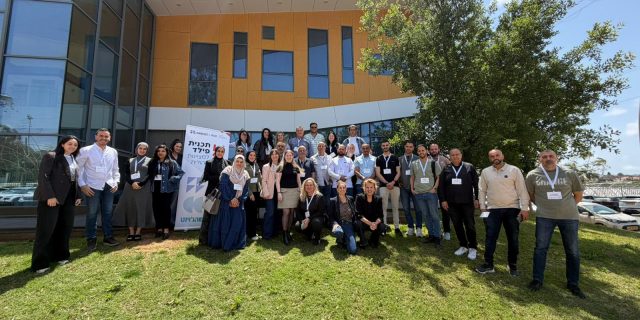

The Dead Sea Conference on Health Policy, organized by the National Institute for Health Policy Research, was held this year for the 23rd time and focused on the theme “Health and Old Age – Shall the Two Walk Together.” The conference, which took place on December 3–4, brought together decision-makers, professionals from the health and welfare systems, researchers, and entrepreneurs for an in-depth discussion of one of the central challenges of the coming decades.
The ongoing increase in life expectancy in Israel is a significant achievement; however, it is accompanied by an extension of the period of life during which people require more complex medical, rehabilitative, and social care. The conference sought to examine how to prepare for this reality in a way that enables people to age in good health, with maximum independence and a high quality of life.
Professional Leadership and Strategic Discussion
The conference was chaired by Yossi Heymann, CEO of JDC-ESHEL, alongside Dr. Orly Barak-Zafrir, Head of the Geriatric Division and the Rehabilitation Hospital at Ichilov. At the opening of the conference, the two presented the key challenges facing the healthcare system, including the growing number of people living many years into old age, the need to integrate medicine, welfare, and community-based services, and the importance of developing services tailored to later stages of life.
In his remarks, Heymann emphasized the need to extend periods of good health and reduce the years in which a person’s functioning is impaired, by postponing dependence on others as much as possible and strengthening people’s ability to continue living active and meaningful lives.
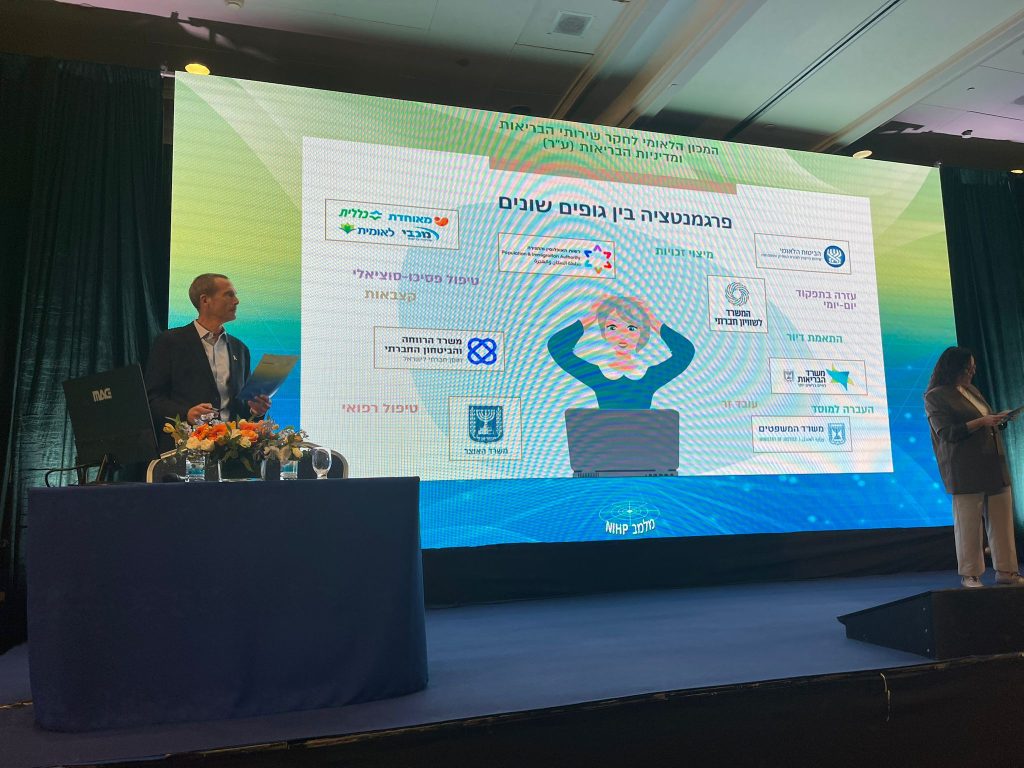
Technological Innovation as Part of the Solution
One of the central sessions of the conference focused on technological innovation in aging in the context of a rapidly changing technological world. The session was led by Ofir Ben Natan, Director of Innovation and Technologies at JDC-ESHEL, and included participants from the health and welfare systems, alongside entrepreneurs and technology professionals.
The discussion presented innovative tools and models aimed at improving medical and care-related responses, supporting functional independence, and assisting in coping with health decline over the years.
What Do We Think When We Say “Old Age”?
During the conference, artificial intelligence tools were also used to analyze audience sentiments surrounding the concept of “old age.” A short survey presented to participants revealed that feelings of fear, loss, and dependence are dominant in the public discourse on aging. At the same time, a significant positive aspect also emerged: a deep emotional connection to family, grandchildren, and the wisdom accumulated over the years.
The findings highlighted the need not only to develop services and responses, but also to change the public discourse – one that acknowledges the challenges, while also emphasizing the possibility of aging in a healthy, active, and dignified manner.
The discussions at the conference sharpened the understanding that preparing for an aging population is not only a medical challenge, but a broad social task that requires systemic thinking, innovation, and cross-sector collaboration – for the sake of a healthier future for later stages of life in Israel.