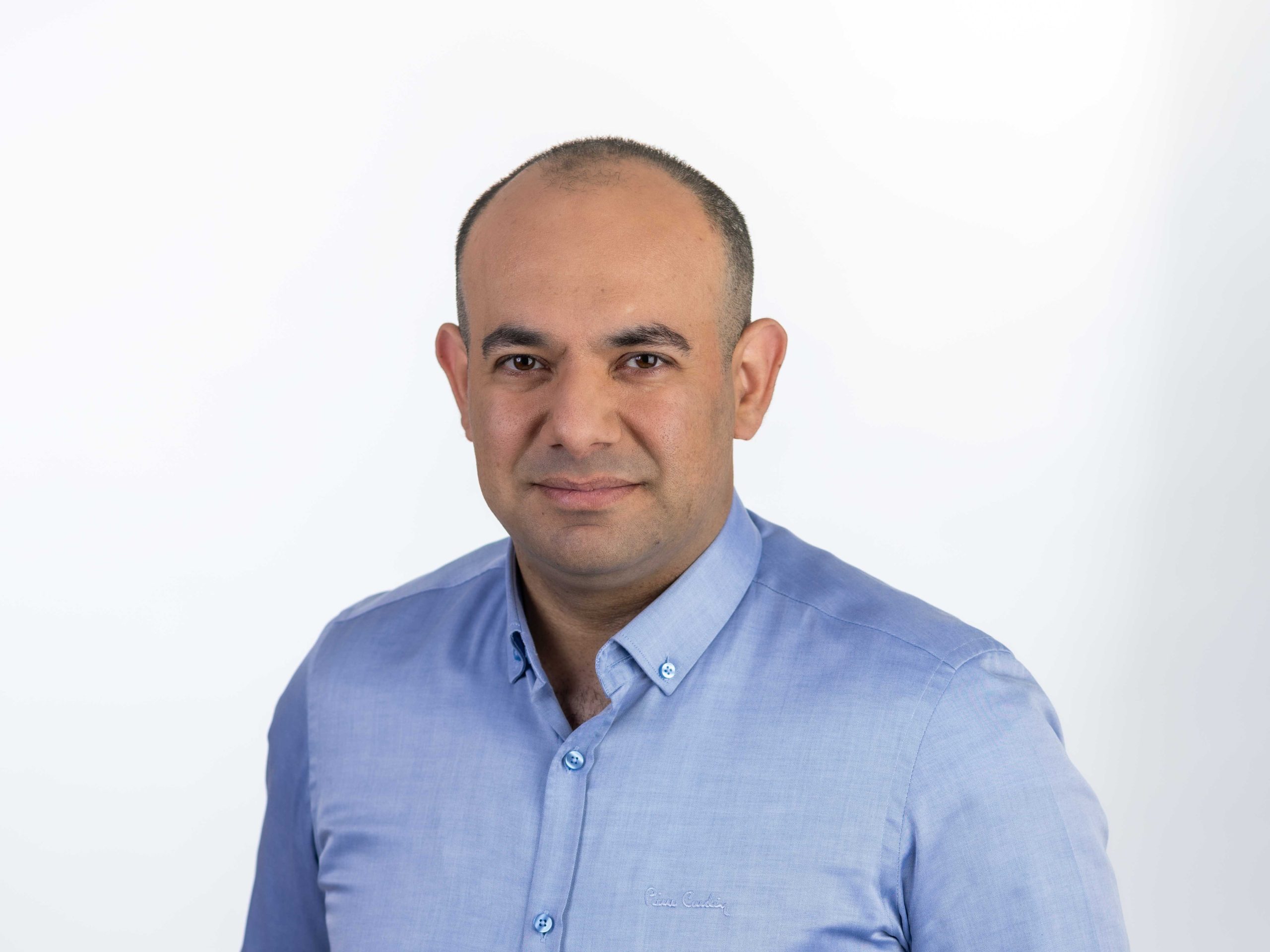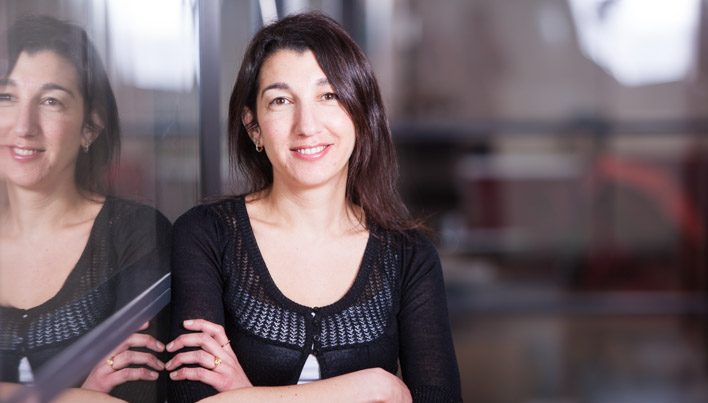
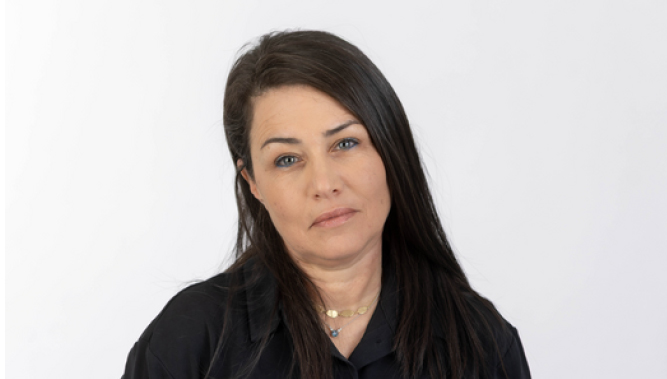
My name is Rotem Schwartz Borovich. I have been a Partnerships Manager at JDC-Ashalim since 2016. Over the years at Ashalim, I have worked on developing programs in Bedouin society in the Negev, in early childhood, and in municipal-level work.
October 7th caught me at my home in Kibbutz Sde Yoav, near Ashkelon. I am a mother of four sons—two of them mobilized themselves as reservists to the Gaza envelope, one had just completed his training as a regular combat soldier in the Nahal Brigade, and another was in a year of service in the north.
When we left the safe room and understood the magnitude of the disaster, I joined professional partners in Bedouin society, and together with the Department for Socio-Economic Development in the Bedouin Authority, the Bedouin Resilience Center, the Ministry of Welfare, and the Ministry of Education—we established a comprehensive emergency response for victims in Bedouin society (families of the kidnapped and the murdered).
In December 2023, about two months after the outbreak of the war, amidst the intensity of the work at the Joint and the support in the community where I live, the disaster struck me personally.
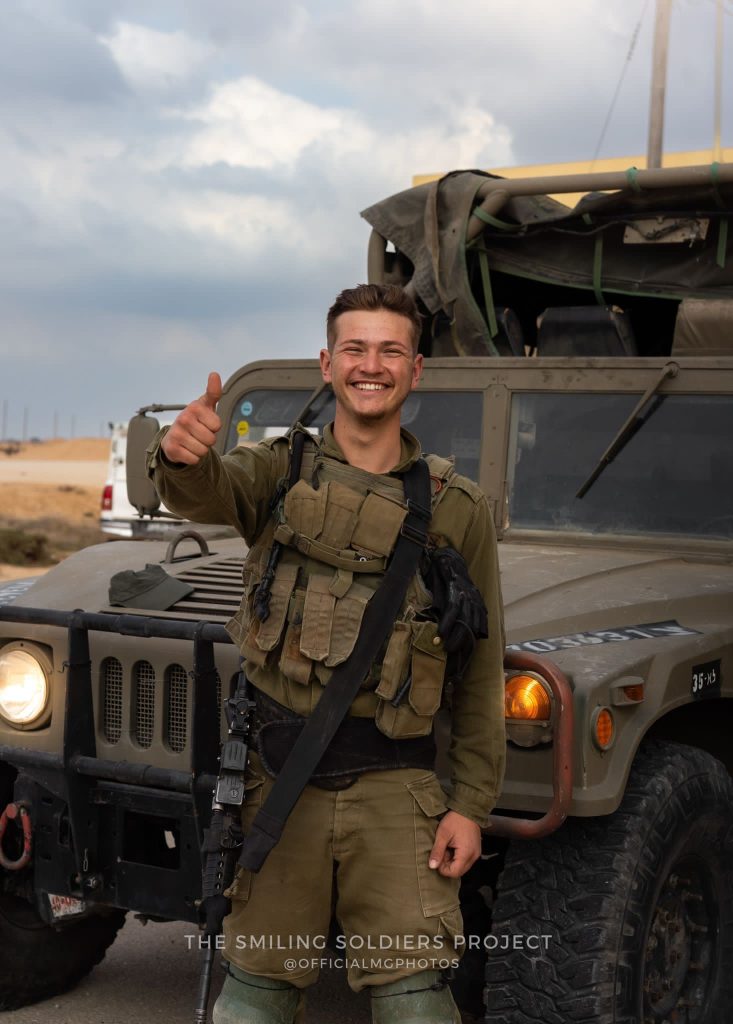
Tal, my son who was fighting in Gaza, was moderately injured, and ten days later, my nephew—Omri Schwartz—was killed in Gaza. Nothing I had done during my military service, as a casualty officer in Golani, prepared me for our loss as a family and for coping with bereavement on a personal level.
Our Omri served in the Paratroopers Reconnaissance Unit and was killed in battle as a cadet in Officer Training School (Bahad 1). Before his service, he did a year of service in Kibbutz Be’eri—for him, this was “Be’eri’s war.” From his youth, he was deeply connected to social action and love of the country. The program I conceived in his light and in his memory at the beginning of 2024 embraces bereaved families and is intended for families seeking to establish a social memorial initiative.
At that time, many diverse responses were activated for bereaved families, especially in the therapeutic context. The program was not established as a therapeutic program, but rather as a program that enables bereaved families who choose commemoration to create and give—out of and alongside pain—based on the understanding that social action opens a window to finding meaning in life.
“Shikma” — Social Memorial Initiatives
The process began when I arrived at “Hackaveret” (the center for social entrepreneurship and innovation of the National Insurance Funds and the Joint) with an initial idea for the program. Already at the early stage, a meaningful connection was formed with the New York Federation, which joined as a strategic partner.
Through professional dialogue with the Hackaveret team, the need was refined to develop a unique model for bereaved families seeking to create impactful social commemoration, based on the existing “accelerator program” at Hackaveret—a program that provides initiatives with a professional framework to move from vision to implementation, succeed, and create nationwide impact.
I partnered with the Hackaveret team, led by Aviya Asher and Avital Eliphant-Piller, together with Yaffa Ben Walid, Director of the Nursing Care Fund at the National Insurance Funds—to create the initial development. Under the umbrella of Hackaveret, with the New York Federation, the National Insurance Funds, and JDC Israel, the program came to life.
As with any program, a professional team was recruited: Hila Lapidot, the program director; Barak Drori, the facilitator; and Revital Mordechai, the emotional support lead. The team managed and developed the content and model with inspiring professionalism, even in the shadow of the challenges of war and reserve duty.
Aviya Asher conceived the name of the program: Shikma. The sycamore tree, known for its resilience in harsh climate conditions and poor soil, represents, in our view, the resilience required to cope with loss and bereavement. The sycamore fruit appears in the Bible, in the Book of Amos, as a fruit that must be wounded in order to ripen. We believe that alongside the fracture, the Shikma program enables the ripening of fruit—through meaningful social commemoration.
The uniqueness of the Shikma program, distinguishing it from other social accelerators, lies in the fact that all initiatives developed within it are memorial initiatives, and all participants are bereaved family members coping with recent and traumatic loss. Although the program is not a therapeutic or support program, bereavement and coping with it are inherently present in every group meeting and in the work on the initiatives. By inviting entrepreneurs to transform bereavement and loss into entrepreneurship and social change, the program embodies the understanding that life after loss continuously and simultaneously involves engagement with the past, memory, and loss—alongside engagement with practical action in the present and with future change and growth.
The Shikma program integrates these two tracks through parallel engagement: commemorating those we have lost, shaping the story of their lives and deaths (second track); and building a sustainable social initiative through concrete action, initiative, and activity (first track). Participants thus move between “life-oriented work”—advancing the initiative here, now, and into the future; and “grief-oriented work”—shaping the memorial narrative, emotions, memories, and relationships with those commemorated. This integration is expressed in every interaction with participants, both as a group and individually.
The Model: From Roots to Fruit – Creating Meaning in Life
Like the sycamore tree, the training and work process throughout the program develops from roots to canopy and fruit:
Roots – Internal connection to the meaning of the initiative, growth, and impact:
The beginning of the learning and development process is dedicated to the places and ideas from which the social memorial initiative grows. At this stage, the connection is clarified and shaped between personal meaning, social meaning, the entrepreneur’s strengths, and the commemorative component of the initiative. Meetings in this stage focus on the essence and purpose of the initiative, and on how it will express the spirit, values, and path of the person commemorated; the desires and strengths of the entrepreneur according to their stage in developing the initiative and their relationship to the deceased; alongside the initiative’s social contribution. At the end of this stage, each initiative is assigned a suitable mentor to accompany its implementation.
Trunk – Strengthening the initiative’s infrastructure:
This stage seeks to build the conceptual foundations of the initiative, to clarify and strengthen its value as a social initiative with a unique contribution to Israeli society and its challenges. Meetings focus on the initiative’s unique value, its social business model, and the construction of its unique story and presentation.
Branches – Implementation and building work plans:
This part of the program focuses on preparation for implementation and the transition to actual execution. Participants build a work plan for launching the initiative and identify opportunities for funding and resource mobilization.
Fruits – Bringing the initiative to life and concluding the journey:
Completion of the development process and preparation for launching. At this stage, participants can submit applications for grants to implement their initiatives based on the work plans they developed.
The Power of a Peer Group
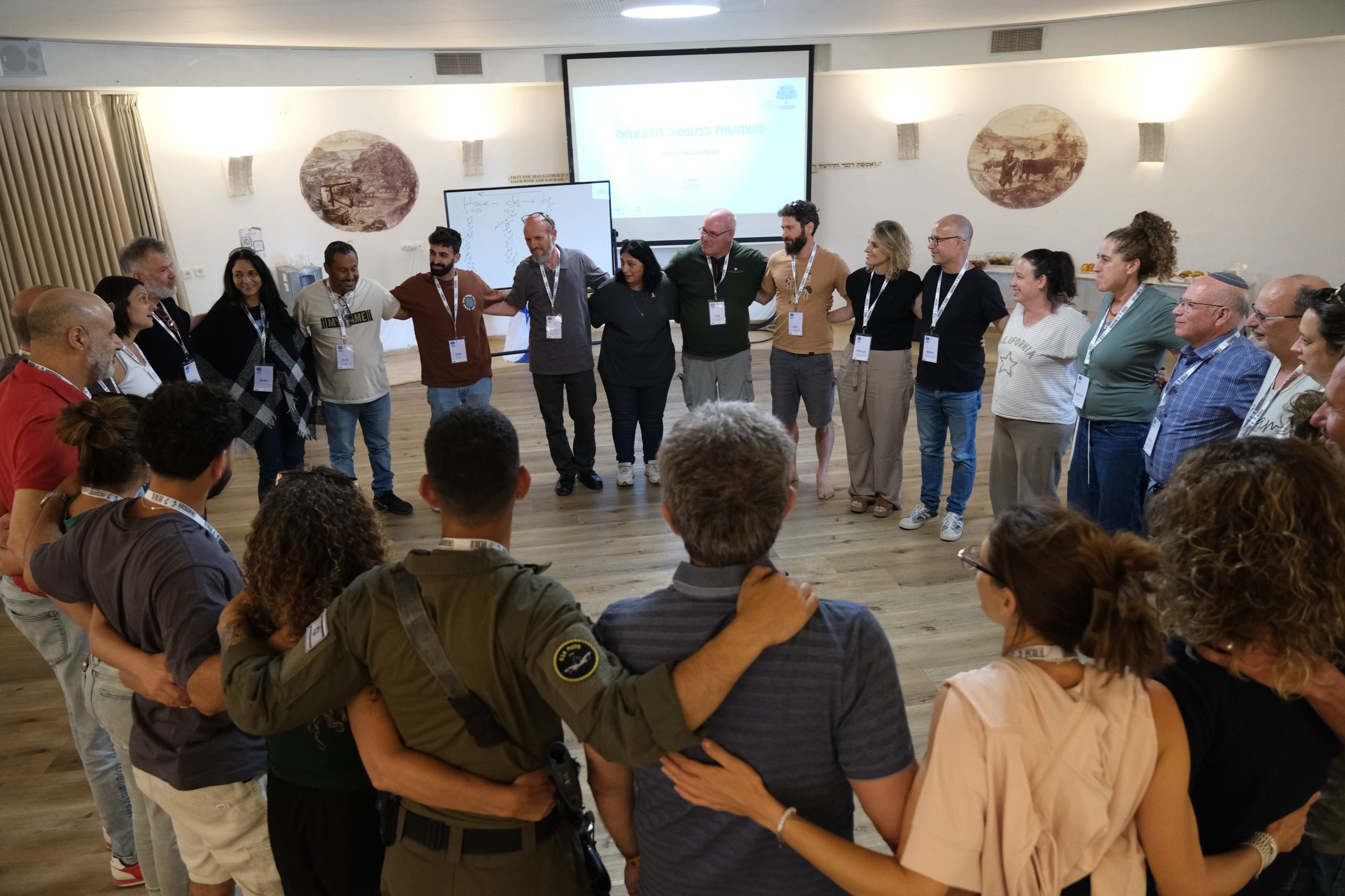
In Shikma meetings, a “content-process group” is formed. In such a group, the goal of the group process is twofold: to provide participants with knowledge and skills in a specific field, and through this, to enable personal growth and development. In such a group, there is mutual influence—on both visible and implicit levels—between the content delivered by the facilitator and discussed in the group, and the group and personal processes taking place within it.
The meetings were conducted in an enabling yet structured setting, where within the work and learning around entrepreneurship and initiatives, there was space to raise challenges and difficulties related to commemoration and coping with bereavement. At the same time, the team ensured that discussions did not drift into turning the group into a therapeutic group.
It was remarkable to witness the connections formed between the families, the participation, and the mutual support across different initiatives. One family shared that this was the first event they had left home for since their loss.
Another family wrote that the initiative they built is “the life that remains after life.”
My Family in Shikma
Omri’s parents, Tomer and Shirli, applied and were accepted into Shikma with an initiative they conceived in his memory: Hachabura (“The Circle”)—a space for circles of support and belonging for bereaved friends, giving space for processing grief among friends—together, as a group. The initiative seeks to embrace friends left broken by the experience of loss through a two-day retreat for an organic group, the creation of a memorial social initiative, and the strengthening of ongoing connection.
The value-based approach of Hachabura is rooted in Omri’s unique way: simplicity and seriousness, joy and excellence, expressing opinions and listening, quiet leadership and initiative.
And know this: time and enemies, the wind and the water,
will not erase you.
You will endure, made of letters.
This is no small thing.
Something, after all, will remain of you.
(Chaim Gouri)
The first cohort of the Shikma program completed the training, with 12 memorial initiatives at various stages of activity. The program continues to accompany the Shikma families and the inspiring social initiatives created in memory of their loved ones—our loved ones. These days, in January 2026, the second cohort of the Shikma program will open. Alongside the pain of the ongoing need, we continue forward, seeking to preserve and expand this important work, following the deep impact the first cohort created for the families and the initiatives.
I feel a sincere obligation to thank Osnat Yaron, Director of Hackaveret, for her willingness to develop and operate Shikma, and for the professional and warm home that the memorial initiatives receive, even after the program ends.
A personal and professional thank you to Shlomi Cohen, CEO of Ashalim, and to Roni Lior, Deputy CEO, who have accompanied my professional work in Shikma and continue to support the concept of “social commemoration in the community” that we are currently developing together with the Families, Commemoration and Heritage Department at the Ministry of Defense.
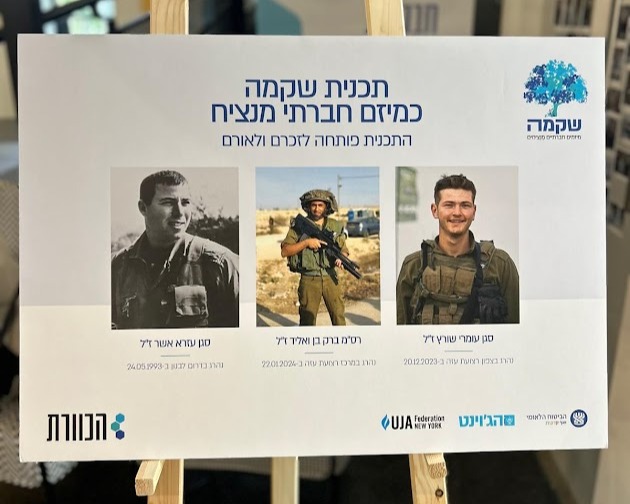
The Shikma program also carries on its heart a personal social commemoration of three loved ones we lost:
The late Barak Ben Walid, son of Yaffa Ben Walid from the National Insurance Funds, who was killed in Gaza on 22.01.2024
The late Ezra Asher, brother of Aviya Asher from Hackaveret, who was killed in southern Lebanon on 24.05.1993
Omri Schwartz, my nephew, who was killed in Gaza on 20.12.2023
It is a great privilege to carry out meaningful social action in their light and in their memory.