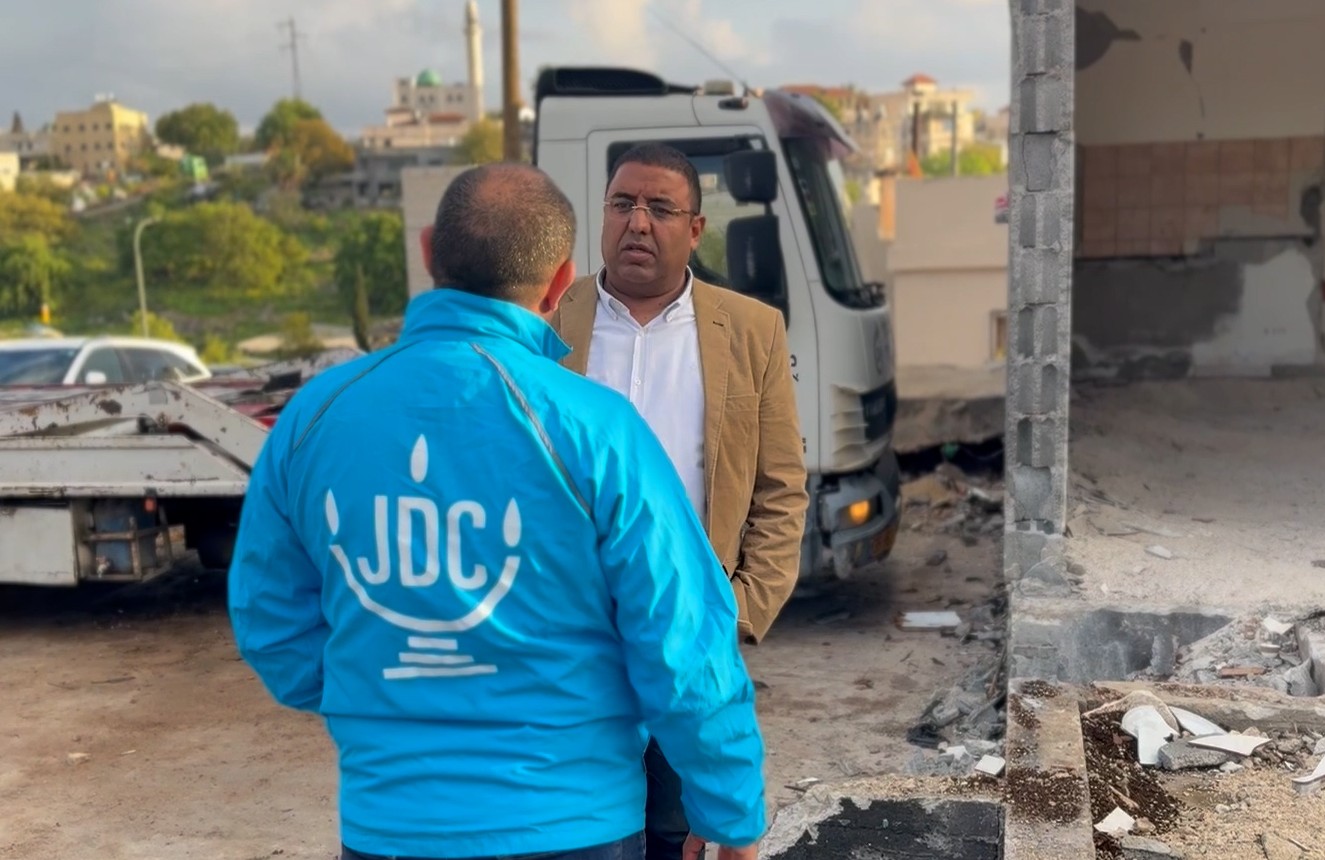
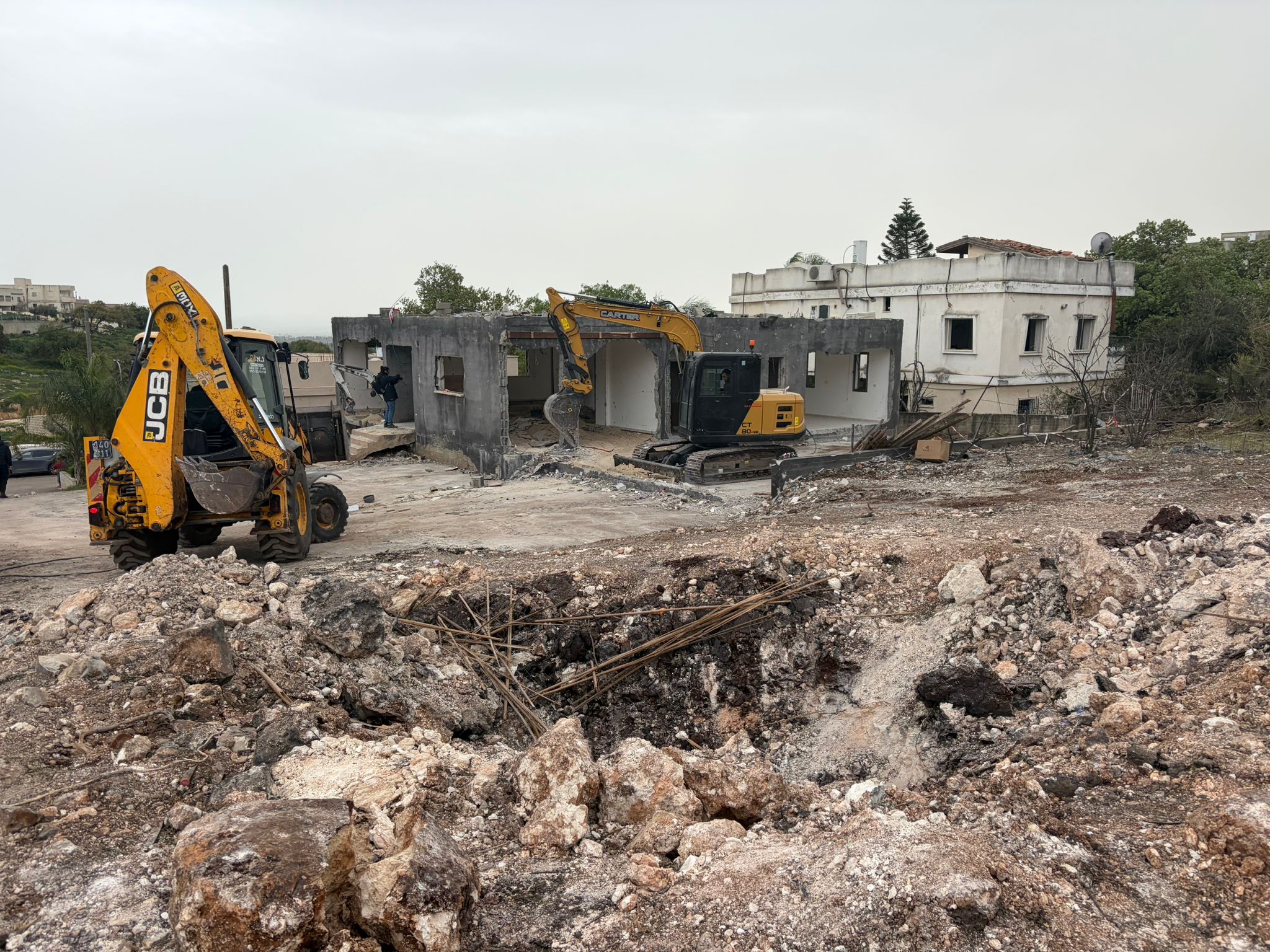
When I began writing this blog, I did not know that by the following morning its content would become highly relevant. Early Friday morning, a warhead from an Iranian missile struck the village of Zarzir, injuring approximately 60 people and causing extensive damage to dozens of homes in the village. The Joint responded as quickly as possible with initial humanitarian aid, including personal supplies, toiletries, and clothing for residents whose homes were damaged, medical and rescue equipment, and assistance in exercising rights alongside community support.
Beyond the immediate and localized response to the event, we are working to bring the “Almanarah” program to the village—a holistic welfare framework, from the municipal level to the community, aimed at better coping with emergency situations—for those that had already occurred, and those that I hope will not happen, but if they do, the authority and its people will face them better prepared.
From the Field to the Model: The Almanarah Program
The reality in the State of Israel has changed beyond recognition since October 7. Even before that, the understanding had begun to form that there is no difference between the front line and the home front, and missiles do not distinguish between an Arab authority and a Jewish one. At JDC-Ashalim and in the Emergency Unit of JDC Israel, we understood that in times of war, welfare departments and caregivers within local authorities are on the front lines of events. In the current war, and in the previous round against Iran, the Arab public in Israel has been experiencing the difficulties and pains of war on a large scale, and therefore we see strengthening the professional and community capacities of Arab authorities as a move of critical importance.
We observed a sharp increase in cases of anxiety and trauma within the community, with social workers being those who provide the initial response. But beyond the professional burden, we identified another critical need: the caregivers themselves are part of the community, and they too need space to breathe.
Out of an awareness of the various challenges, at the center of which is the lack of protective infrastructure in local authorities, we sought ways to strengthen and streamline how authorities cope with emergency situations. Thus, Almanarah was created—a framework with three layers, each connected to the other, primarily strengthening the ability of the local authority, its employees, and its volunteers to care for and support the community during emergencies.
What We Learned: Who Takes Care of the Caregiver?
Our work in the field taught us three central lessons about the evolving needs:
Resilience for Care Teams: We built a program of 5–6 sessions that provides tools for personal coping with workload. The model combines practical tools for managing emergency situations with strengthening the personal and group resilience of professionals. The combination enables deep insights, strengthens the sense of capability, fosters a sense of partnership, and builds resilience. In the workshops we held, the sentence that came up most frequently from staff was: “This is the first time someone has asked us how we are doing.”
From Passive to Active Welfare: Instead of waiting for residents to come to the office, we created a preliminary mapping of the most vulnerable communities—elderly individuals, families with young children, and people with disabilities—alongside an understanding of their level of protection. This move makes it possible to care for them in routine times and even more so during emergencies, whether through local rescue teams or emergency forces. It is a step that can save lives. More than once, in authorities where this mapping was implemented, we heard: “We reached homes that needed our help, but we didn’t know about them.”
Volunteers as First Response (Initial Self-Help Assistance) Force: In every authority, the welfare department is responsible for working with volunteers and often manages several volunteer groups. Typically, volunteering is directed toward activities and days aimed at improving the appearance of the locality, community activities, or organization at social events. In the current reality, volunteers assist in critical actions during emergencies, but most lack dedicated training for functioning at incident scenes. The Almanarah initiative connected the Home Front Command and security forces with volunteer groups, and training frameworks were established within SAR (search and rescue) teams. Thanks to this training, these teams have repeatedly proven their importance in saving lives—whether in the “Am KeLavi” events in Tamra, Shefa-‘Amr, and now in Majd al-Krum. The volunteers have become skilled teams who arrive at impact sites better prepared than ever, assist in rescue operations, and save lives until the arrival of security and emergency forces.
Looking Ahead
Emergencies expose gaps, but they also create infrastructure for the future. We saw this in Tamra, where volunteers trained for emergencies also assisted the public during floods and heavy rains this past winter. Local rescue teams have become an address for residents of the authorities. The professional capabilities and self-confidence of welfare teams are proving to be key to our community resilience and stability.
We continue to expand the “Almanarah” program to additional authorities as needed, and we are working to make the accumulated knowledge accessible—from our expert professionals to those experiencing the field on a daily basis.
You Can Learn Too
Recently, we held a webinar for professionals, in which volunteers and representatives from authorities who had already undergone the training shared the knowledge and experience gained from their work. You are invited to watch the webinar recording and learn how to implement the program:
When we act hand in hand—professionals, volunteers, and community—we prove that partnership is our strongest shield.