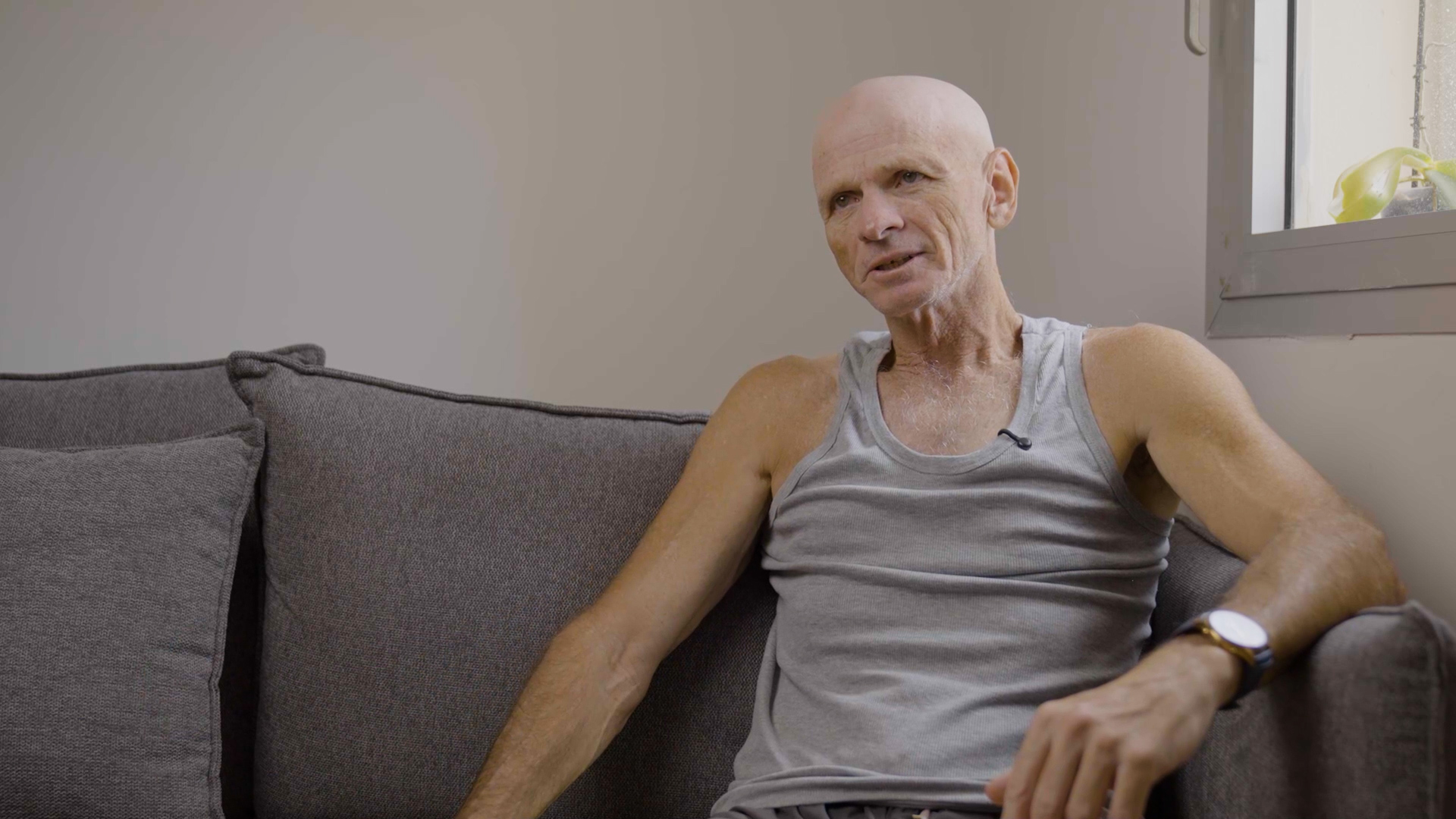
The last thing Dror Prokhtenis (65) remembers before his reality shattered is the “boom.” In a split second, the air in the room became thick with sand, smoke, and debris. For long minutes, he moved through the devastated apartment, trying to process the sight: three windows facing the neighboring building had completely disintegrated, and the blast tore the home apart from the inside—from the doorframes to the wardrobe that collapsed.
Without shoes, stepping on sharp shards of glass that cut into the soles of his feet, Dror felt his way outside. “It took me 40 minutes to extract myself from the apartment,” he recalls. When he finally reached the street below—the bleeding streets of Bat Yam—he encountered a chilling silence: people in shock, paramedics with stretchers, and neighbors who simply stood there crying. In those moments, the only thing guiding him was a basic survival instinct: “All I wanted was for people to know who I was. I took my phone and my wallet with my ID, so I wouldn’t just be another name on a list.”
Geula Israel, Head of the Welfare Administration at the Bat Yam Municipality, witnessed this drama unfolding in real time. “We arrived at the scene and encountered around 2,000 people,” she recalls. “Some arrived in pajamas, without shoes—elderly people in the most complex situations imaginable.” That fateful night, as teams worked to evacuate residents to hotels and provide immediate assistance, Geula realized that what stood before her was far more than a localized emergency. Even then, it was clear this was not just about physical evacuation to a safe place, but about a deep social rescue operation that would require rebuilding entire lives.
“The damage was in the most complex neighborhood in the city,” Geula explains. “We saw populations that require far greater attention: isolated individuals without family support, new immigrants who don’t understand the language, elderly people and people with disabilities who were suddenly left with nothing.” She emphasizes that while people with strong family networks manage to cope, here there was a need for close, hands-on support: “These are people who were barely managing to hold themselves together during routine times, and now their world had simply collapsed.”
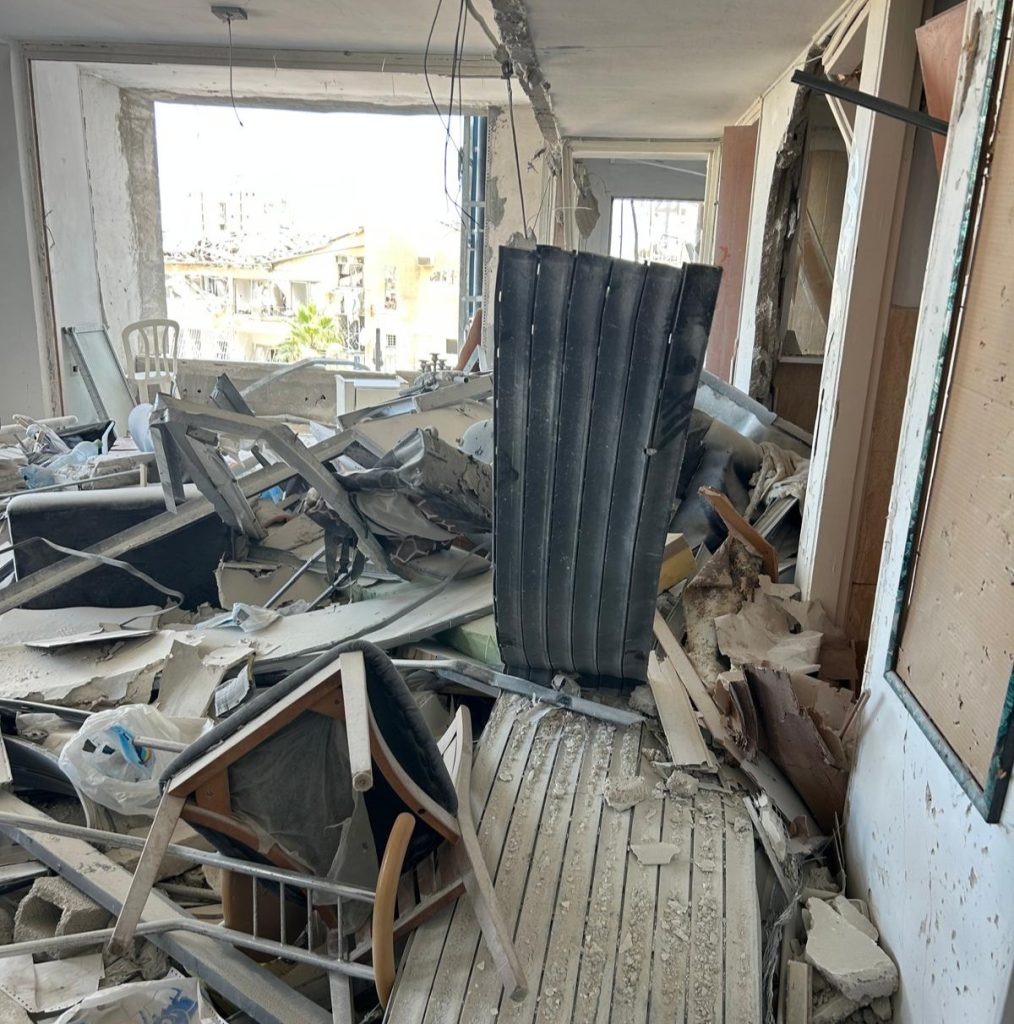
Out of this understanding, the “Ad HaBait” program was born—an emergency initiative of the Joint, in partnership with the Ministry of Welfare and Social Security and the local authorities of Bat Yam, Ramat Gan, and Be’er Sheva. The program is designed to bridge the gap between temporary accommodation in hotels and a return to independent life in the community—back home. It provides comprehensive support that includes:
-
Locating alternative housing: Personal guidance in finding an apartment suited to specific needs.
-
Exercising rights with authorities: Critical assistance with paperwork and navigating interactions with the Property Tax Authority, National Insurance Institute, and other government bodies.
-
Emotional and professional support: A deep understanding of the complex emotional state and the provision of a listening ear.
For Dror, this support began already in the hotel room, at the moments when despair started to seep in. The program team didn’t just offer solutions—they accompanied him physically, hand in hand, from one apartment to another, examining every detail on his behalf. They helped him navigate the bureaucratic maze with the Property Tax Authority, reviewed contract clauses with him to ensure he was protected, and made sure that even when government assistance ended, he would have stable ground to stand on. This close accompaniment transformed from a technical safety net into a source of strength and hope.
Dror sums up the experience in words that touch the very core of the work: “My life came to a halt. If I hadn’t had that listening ear and the professional support system of the program, I don’t know if I would have made it.” Thanks to the “Ad HaBait” program, people who lost everything in a single night are given the opportunity to rebuild a home anew. As part of the program, 100 families from the most vulnerable populations received assistance after their homes were damaged as a result of the “Am K’Lavi” war in June 2025, in the cities of Bat Yam, Be’er Sheva, and Ramat Gan.