Supportive Communities: A Warm Home Within the Community
Approximately 21,000 Holocaust survivors currently belong to the “Supporting Communities” program, which we lead in collaboration with the Ministry of Social Affairs and local authorities. The goal of the program is to enable each survivor to continue living in their home and community, while maintaining quality of life, independence, and a sense of security.
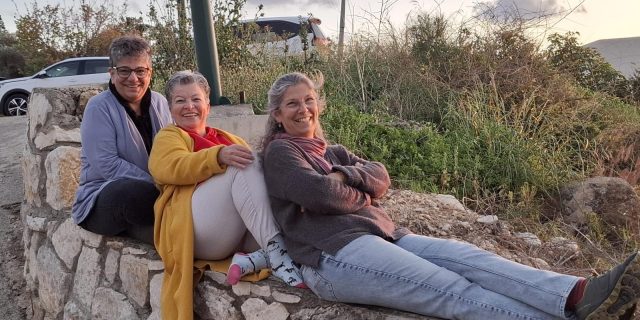
Through a personalized, flexible and supervised basket of services – tailored to the needs and desires of each community member – survivors receive constant support from professionals, including program managers, social coordinators and community ‘fathers’ or ‘mothers’.
The program team sees each survivor as a whole, works to maintain daily contact with them, and ensures a quick response to emergencies, daily problems, and even alleviates loneliness. The vision is to build a personalized environment for each member, combining professional support with a real and warm sense of community.
CELEB: A Basket of Services Delivered to the Home for Housebound Survivors
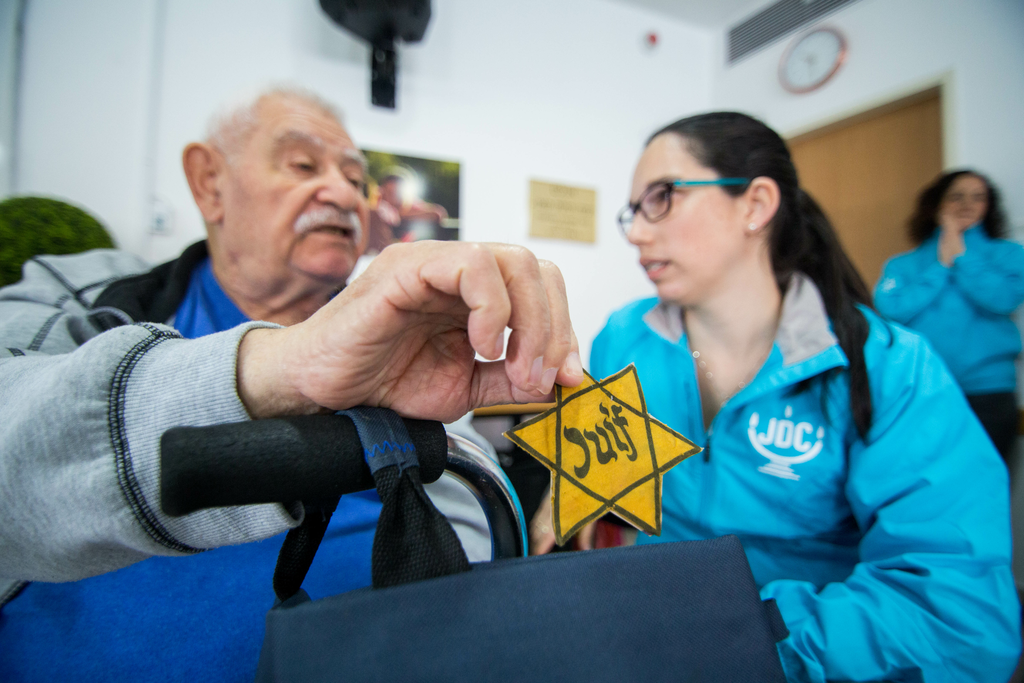
The CELEB (Basket for Survivors at Home) program, operated in collaboration with the Ministry of Social Affairs, provides a personal and daily response to 564 Holocaust survivors confined to their homes. By employing a dedicated volunteer network, the program aims to alleviate feelings of loneliness, enrich the survivors’ world, and provide activities of interest, conversation, and companionship – without them having to leave their homes.
In addition, volunteers and staff serve as “seeing eyes” for the welfare community: they monitor the condition of each survivor, identify areas of distress or crisis in real time, and help prevent deterioration in the survivors’ physical and mental well-being. CELEB was born from the understanding that in old age, limited mobility can lead to loneliness, difficult memories, and exacerbate feelings of disconnection – and offers a human space that embraces and connects, bringing the community back into the home.
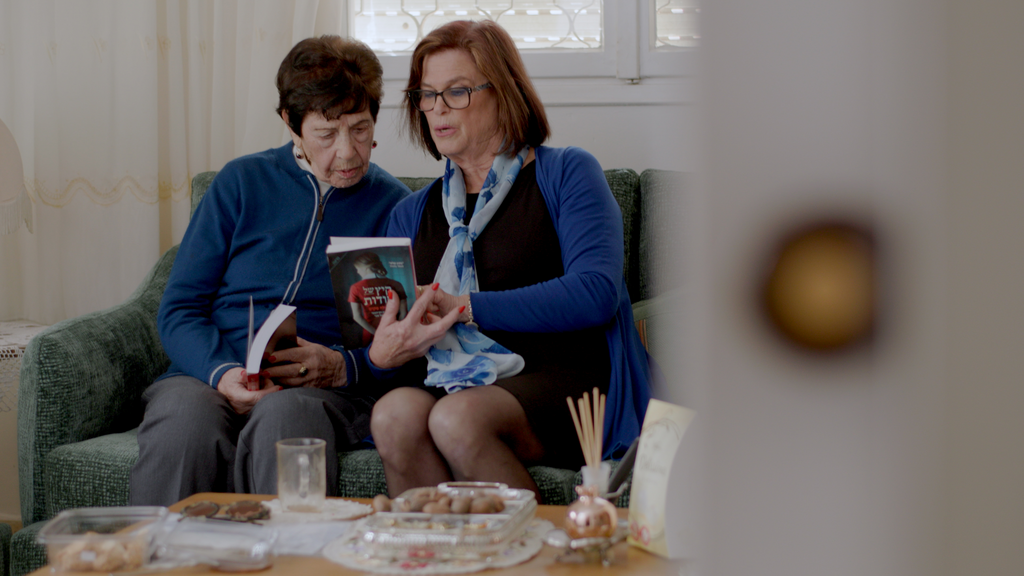
“Testimony Theater”: Passing the Torch Through the Living Story
“Testimony Theater” is one of the most exciting intergenerational projects we promote: a powerful connection between Holocaust survivors, second-generation members, and teenagers aged 14-15, which, through several group meetings, yields an exciting theatrical performance.
As part of the project, led by Irit and Ezra Dagan, survivors and youth meet for a therapeutic process that combines drama therapy and artistic expression. The young people listen to the life stories, identify with the survivors’ experiences, and become their bodies and mouths on stage – instead of history books or black-and-white photos.
This gathering not only keeps the memory alive but also allows many survivors – some of whom have never told their stories – to process their past in a supportive and embracing environment. The concluding performances, in which all members of the group participate, are presented to the local community, students and families, and form a bridge of understanding, inclusion and respect between the generations.
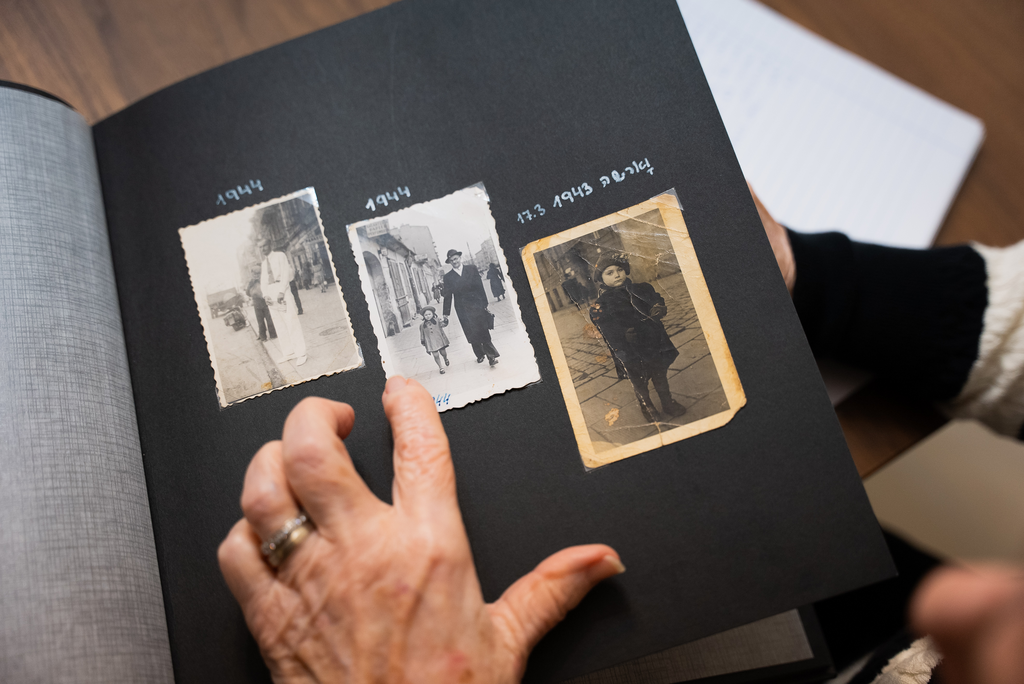
Photography Workshops with Photo Israel: Making Voice Through the Camera Lens
As part of a unique collaboration with the “Photo Israel” association, the Joint holds six unique photography workshops throughout the year, in which dozens of Holocaust survivors participate.
The workshops are based on the PHOTO VOICE approach – an innovative social method that allows people to tell their personal stories through photography. During the workshops, survivors learn a variety of photography techniques, experience documenting their world through their own eyes, and are given a platform to share their stories, desires, and unique perspectives on life.
Photography becomes a tool for empowerment, personal expression, and community connection – and gives survivors a loud and clear voice, which connects them to the public and illuminates their world from the inside out.
Professionals Forum: Collaborative Learning, and How to Create Ongoing Support
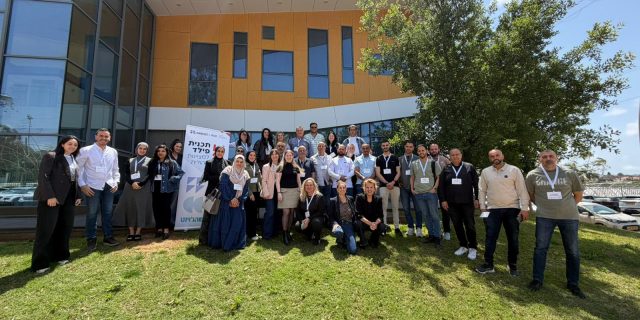
The Forum of Professionals Working with Holocaust Survivors, recently founded at the initiative of the Joint, brings together approximately 200 participants from a wide range of settings – including social services departments, nursing homes, coordinators of specialized programs, and leading organizations such as the “Claims Conference” and “Amcha.” The meetings are held quarterly and offer an opportunity for professional enrichment, knowledge sharing, and peer learning.
Following the events of October 7, the forum focused on two critical issues: palliative care and advance medical directives; and dealing with double trauma among bereaved grandparents, including Holocaust survivors.
The events of the war exacerbated the unique difficulty experienced by survivors: difficult memories from the past were awakened by experiences such as prolonged stays in shelters, loss of contact with family members, and evictions from homes – which echo memories of the Holocaust.
However, inspiring resilience is also evident: many of the survivors demonstrate tremendous mental resilience, the result of years of dealing with extreme life challenges and conveying a message of hope and perseverance even in the most difficult moments.
Continuing to Walk Together
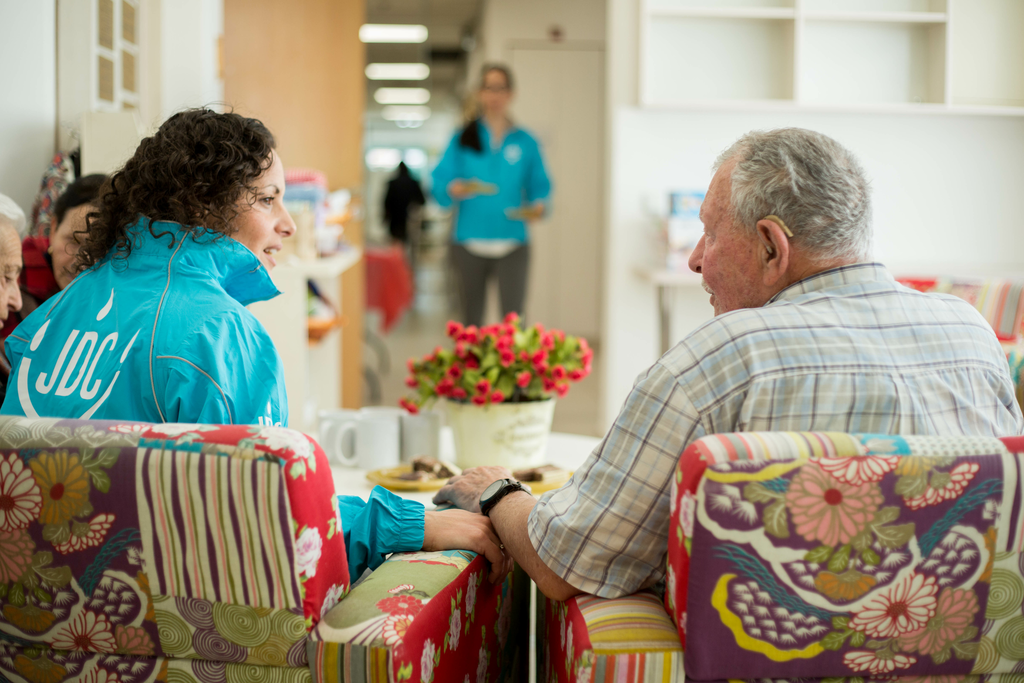
Holocaust Remembrance Day is a painful but also compelling reminder: it is our duty to continue to support, listen, embrace, and empower Holocaust survivors every day of the year. We are committed to continuing to act on their behalf – in routine and emergency situations – out of deep appreciation, a desire to preserve their living memory, and a constant concern for their well-being, health, and dignity.